Why visit El Jem
Why visit El Jem
Rome's other Colosseum
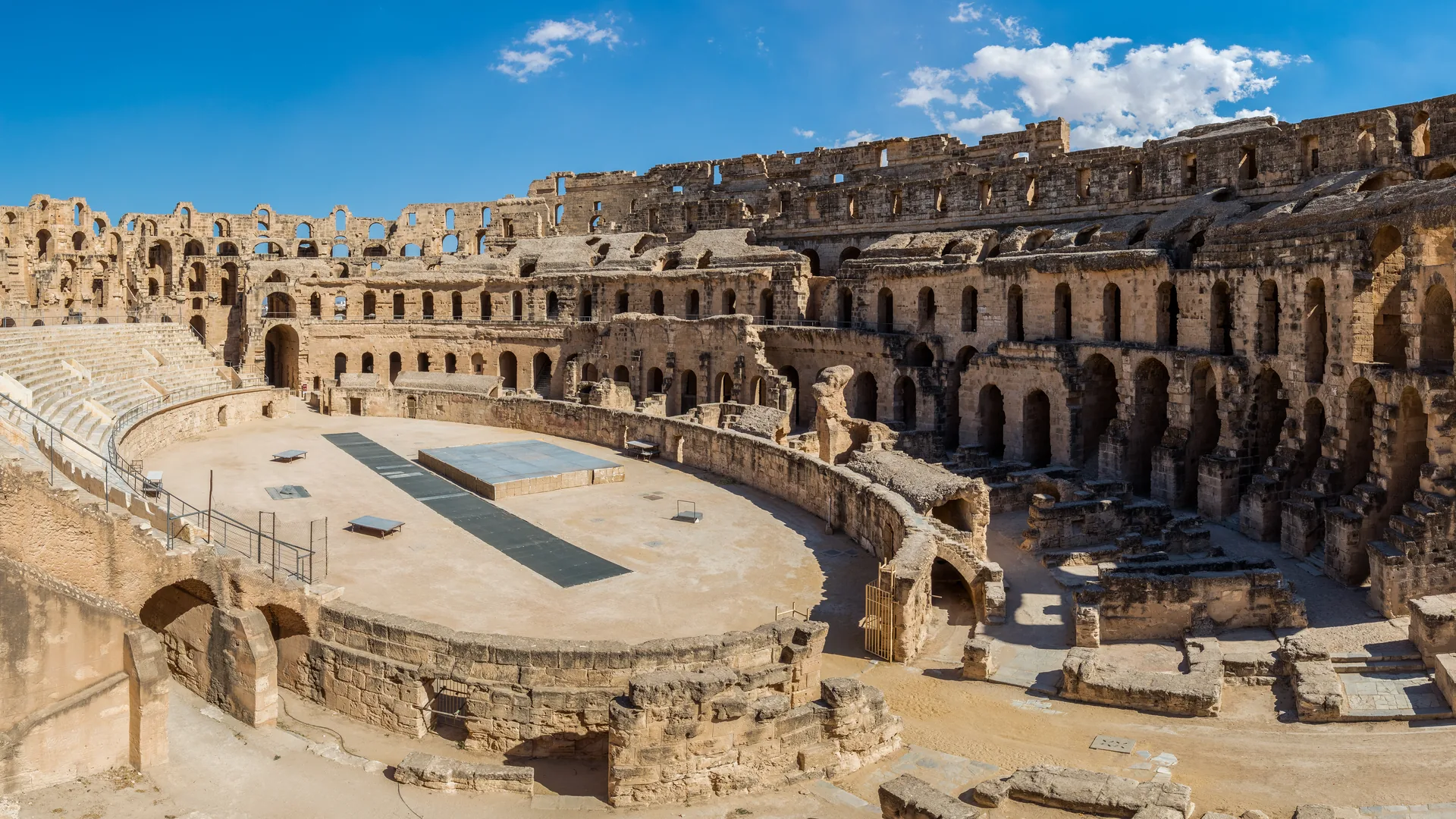
Built around 238 AD in the Roman city of Thysdrus, the amphitheatre of El Jem is one of the largest the Romans ever raised and among the best-preserved anywhere. With an estimated capacity of 35,000, it rivals the Colosseum in scale — and in places is better conserved. Seeing it rise from a modest Tunisian town is genuinely startling.
Walk where the Colosseum keeps you out
What makes El Jem special is access: you can walk the arena floor, climb through the tiers of seating (the cavea), and descend into the hypogeum — the underground passages where animals and gladiators once waited to be hoisted into the arena. It's the Roman-amphitheatre experience with far fewer crowds and far more freedom to explore.
A survivor with many lives
Nearly 1,800 years on, the amphitheatre has been a Roman arena, a medieval fortress, and even a saltpetre works — and today it hosts a celebrated summer symphonic music festival under the stars. Its golden stone and sheer completeness make it one of the great sights of North Africa.
What to see at El Jem
What to see at El Jem
El Jem is a walk through a nearly-whole Roman amphitheatre — inside, above and below the arena. Here's what to look for.
- The façade
The tiers of arches
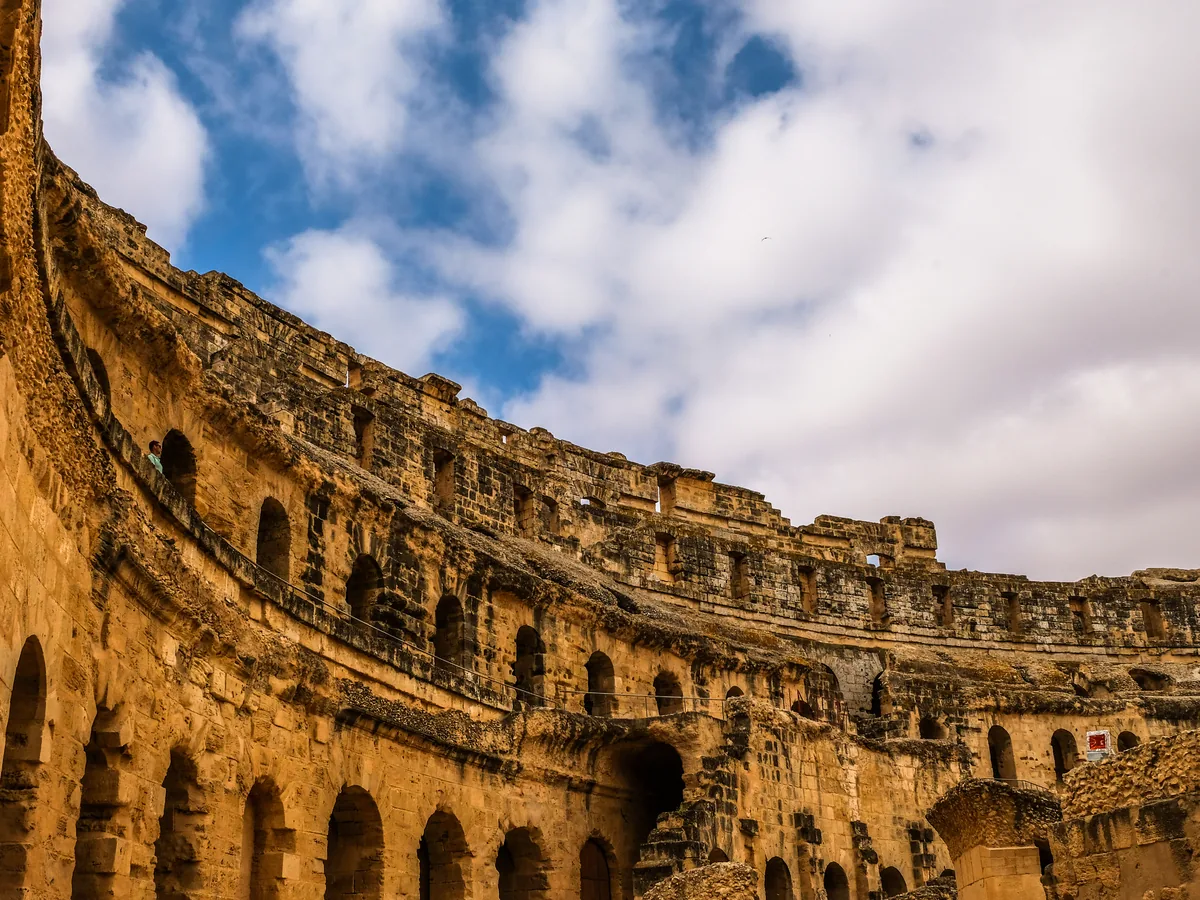
The exterior wall rises in great arcades of arches — the sweeping, repeating rhythm that gives the building its grandeur. From the outside it reads almost like the Colosseum; up close, the golden stonework is remarkably intact.
- The arena
The arena floor
Step out onto the oval arena where the spectacles took place, ringed by the seating that once held tens of thousands. Standing at the centre, with the tiers towering around you, is the moment the scale really lands.
- The hypogeum
The underground passages
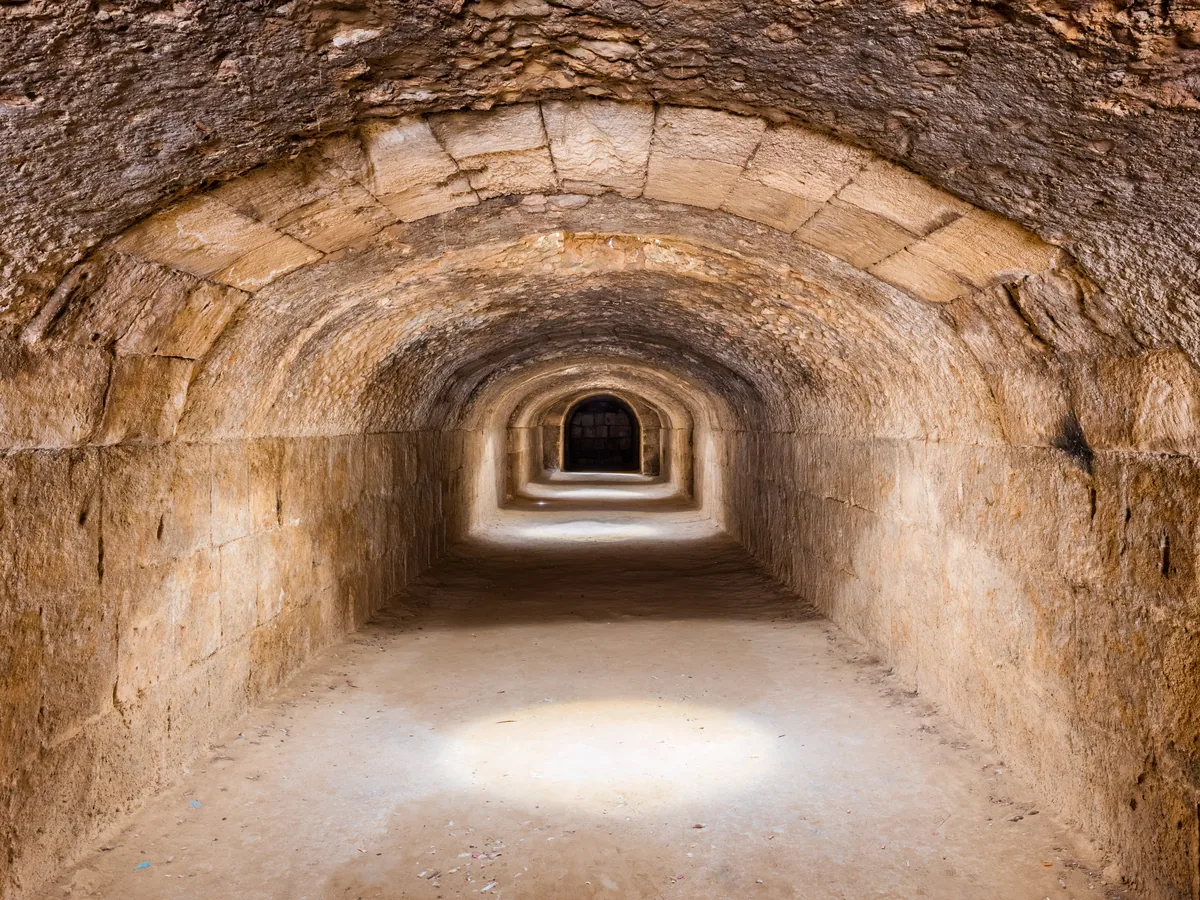
Descend into the hypogeum beneath the arena — the tunnels and cells where wild animals and gladiators were held before being raised to the sand. Being able to walk it is one of El Jem's rare pleasures.
- The cavea
The seating tiers
Climb the surviving cavea for the view down into the arena and out over the town. The three original levels of seating stepped up to a height of some 36 metres — a vantage that shows just how vast the crowd once was.
- The museum
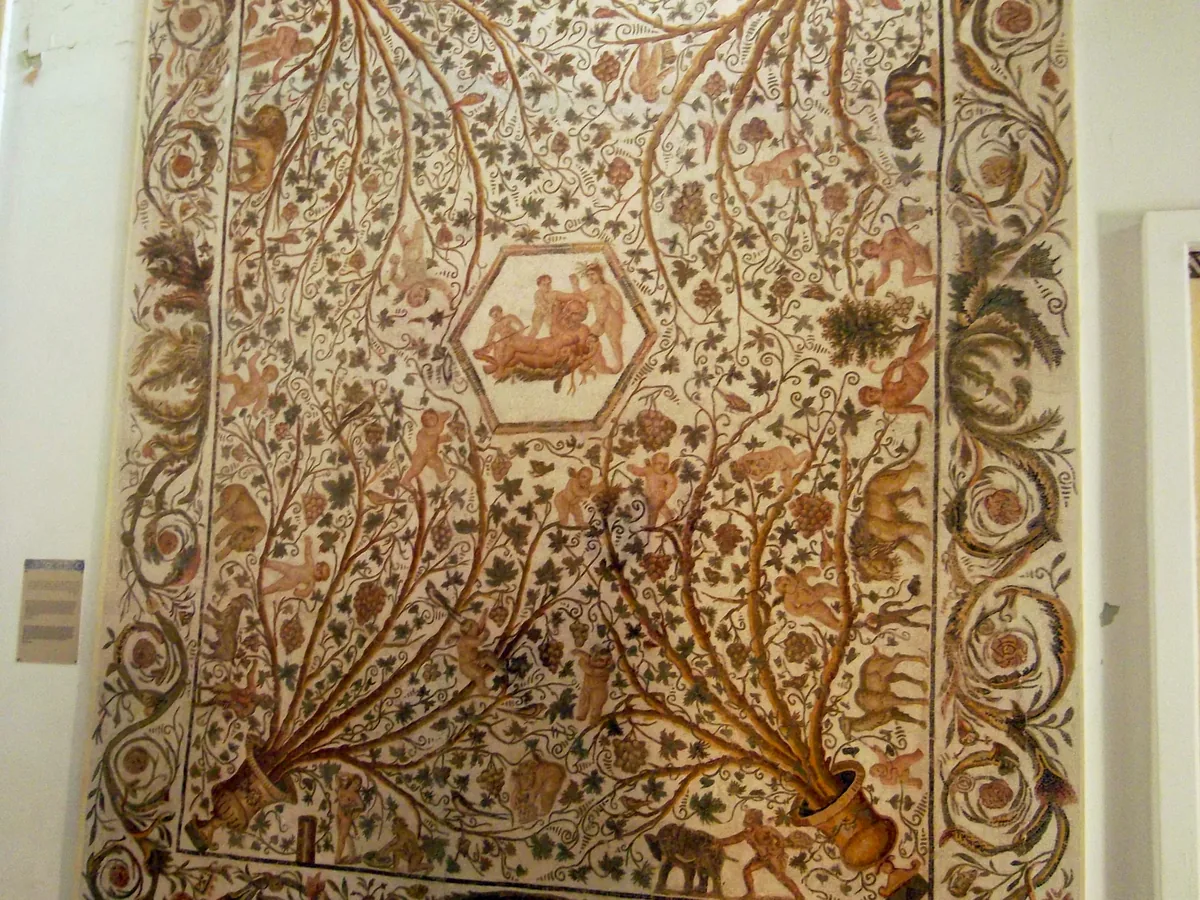
Mosaics of Thysdrus
El Djem's archaeological museum, near the amphitheatre, holds superb Roman mosaics from the wealthy villas of ancient Thysdrus — a colourful counterpoint to the monumental stone, and often included on tours.
- The festival
Music under the arches
In summer the amphitheatre becomes a concert hall for the El Jem International Symphonic Music Festival — orchestras playing where gladiators once fought. If your visit lines up with a performance, it's unforgettable.
Getting there & planning
Getting there & planning
El Jem is inland in central Tunisia, so most visitors come on a day tour from the coast — here's how it works.
A day trip from the coast
El Djem sits inland between Sousse/Monastir and Sfax. Most visitors come on a half- or full-day tour from the east-coast resort areas — Hammamet, Sousse, Monastir and Mahdia — which handle the drive and add a guide. There's also a train station in town if you prefer to come independently.
Combined tours are common
Many operators pair El Jem with the holy city of Kairouan and Monastir in a single day. If you want to focus on the amphitheatre itself, look for the El-Jem-focused half-day options rather than the wider combos — both are on the booking widget.
On site
You're free to roam the arena, the seating tiers and the underground passages, so wear sturdy shoes and expect steps and uneven stone. There's little shade, so bring a hat, sunscreen and water — central Tunisia is hot from late spring to autumn.
Timing
Early or late in the day is best for light and heat, and the site is quietest outside the midday coach window. Allow an hour or two inside; a typical tour also builds in the drive and often the museum or a second stop.
El Jem & Roman Tunisia, in pictures
El Jem & Roman Tunisia, in pictures
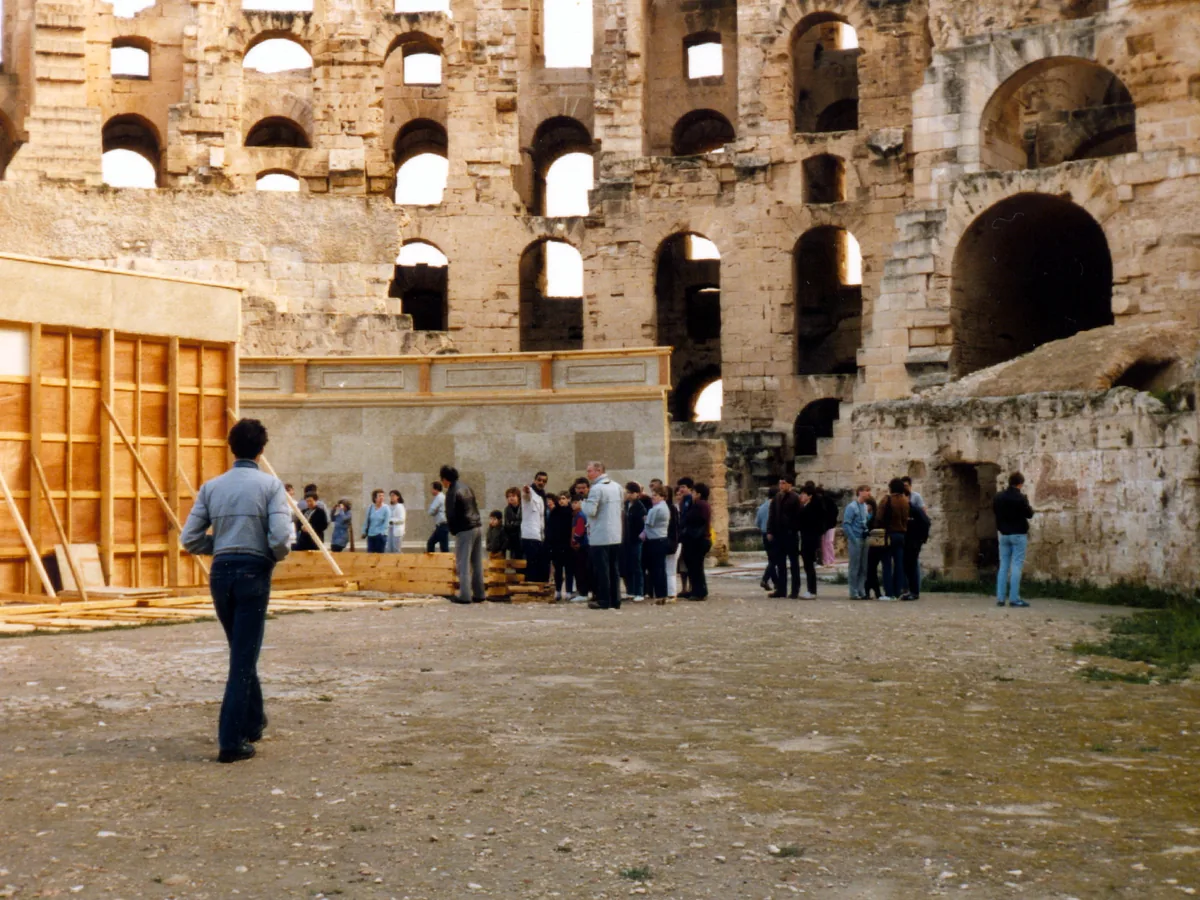
The amphitheatre inside and out, and the golden stone of ancient Thysdrus.
Tickets & tour options
Tickets & tour options
| Option | What it includes | Good to know |
|---|---|---|
| El Jem half-day tour | Transport, guide and time at the amphitheatre | Best if you want to focus on El Jem itself |
| El Jem + Kairouan combo | Adds the holy city of Kairouan, often Monastir | More sights, less time at each |
| By resort | Departures from Hammamet, Sousse, Monastir, Mahdia | Choose the one nearest your hotel |
| Good to know | Museum sometimes included | Check what each option covers before booking |
Ways to visit El Jem
Find an El Jem tour or ticket for your dates
Every option below is bookable through GetYourGuide, with live availability and the final price shown in your own currency before you pay.
Planning your visit
Planning your visit
Choose focused or combo
Decide first whether you want an El-Jem-focused half-day, which gives you real time inside the amphitheatre, or a full-day combo that adds Kairouan and Monastir. The combos see more of Tunisia in a day; the focused tours do justice to El Jem itself. Both are listed in the booking widget with live prices.
Pick your departure point
Tours run from the main east-coast resorts — Hammamet, Sousse, Monastir and Mahdia. Choose the option leaving from where you're staying; from the further resorts the drive is longer, so weigh that against the time you'll actually spend at the site.
Dress for sun and stone
You'll walk the arena, climb the tiers and go underground, so wear sturdy shoes and bring a hat, sunscreen and water. Central Tunisia gets very hot in summer; morning or late-afternoon visits are more comfortable and better for photos.
Booking flexibility
The listings offer free cancellation up to 24 hours before and, on many options, reserve-now-pay-later — so you can lock in a day without paying today and still adjust if your Tunisia plans change.
Planning an El Jem day trip
Planning an El Jem day trip
GEO/FAQ
El Jem amphitheatre questions
What is the amphitheatre of El Jem?
It's a Roman amphitheatre in the town of El Djem, Tunisia — ancient Thysdrus — built around 238 AD. One of the largest amphitheatres the Romans ever built, with an estimated capacity of 35,000, it is among the best-preserved in the world and a UNESCO World Heritage Site since 1979. It's often described as a rival to Rome's Colosseum.
How do I get there?
El Jem is inland in central Tunisia, between Sousse/Monastir and Sfax. Most visitors come on a half- or full-day tour from the east-coast resorts — Hammamet, Sousse, Monastir and Mahdia — which include transport and a guide. There's also a railway station in town for independent visits.
Can I go inside and underground?
Yes — and that's the joy of El Jem. You can walk out onto the arena floor, climb the surviving seating tiers, and descend into the hypogeum, the underground passages where animals and gladiators were once held. It offers a freedom to explore that the more crowded Colosseum doesn't.
Should I choose an El Jem-only tour or a combo?
El-Jem-focused half-day tours give you the most time at the amphitheatre itself. Full-day combos add the holy city of Kairouan and often Monastir, seeing more of Tunisia but with less time at each stop. Each option's inclusions and live price are shown in the booking widget — pick based on how much you want to focus on El Jem.
What should I bring, and when should I go?
Wear sturdy shoes for steps and uneven stone, and bring a hat, sunscreen and water — there's little shade and central Tunisia is hot from late spring to autumn. Early morning or late afternoon is best for light, heat and avoiding the midday coach crowds.
Is there anything else nearby?
Yes — El Djem's archaeological museum, close to the amphitheatre, displays outstanding Roman mosaics from ancient Thysdrus and is often included on tours. In summer, the amphitheatre also hosts the El Jem International Symphonic Music Festival. The listings offer free cancellation up to 24 hours before if plans change.
Still deciding which tour, or which day?
Leave your email and roughly when you're travelling — we'll send a short rundown of how the El Jem tours from the coast resorts compare and how to plan the day.